Buyer's guide - planning a kitchen extension in 2026
A kitchen extension is the biggest home project most families ever take on. Done right it transforms daily life and adds real value to the property. Done badly it is a nightmare of delays, arguments and cost overruns. This guide walks through the decisions in the order you need to make them.
Why extend rather than move
Moving house in the UK in 2026 costs more than most people expect. Stamp duty on a £600,000 home is around £20,000. Estate agent fees, legal fees, removals, decoration - you are looking at £40,000 to £60,000 of costs before you have put a single nail in a wall. And the whole process takes six months of stress. A 5 m by 6 m rear kitchen extension typically costs £60,000 to £120,000 built, takes twelve weeks, and adds more to the value than you spent.
Permitted development or full planning?
Single-storey rear extensions up to 4 m deep on detached houses and 3 m on semis usually fall under permitted development - no planning permission needed, just a lawful-development certificate. Two-storey extensions, very large single-storey extensions, and anything in a conservation area or on a listed building need full planning. We advise you on day one which route is right for your site and we handle the paperwork.
Open-plan kitchen-diner or broken-plan?
The open-plan kitchen-diner ruled the last decade - knock every wall out, one huge space. In 2026 the smart money is on broken-plan. Same big extension but with an internal glass bifold or sliding door between the kitchen and the rest of the space. Open when you entertain, closed when you work from home, and ideal for households with kids on school calls.
Glass-led design
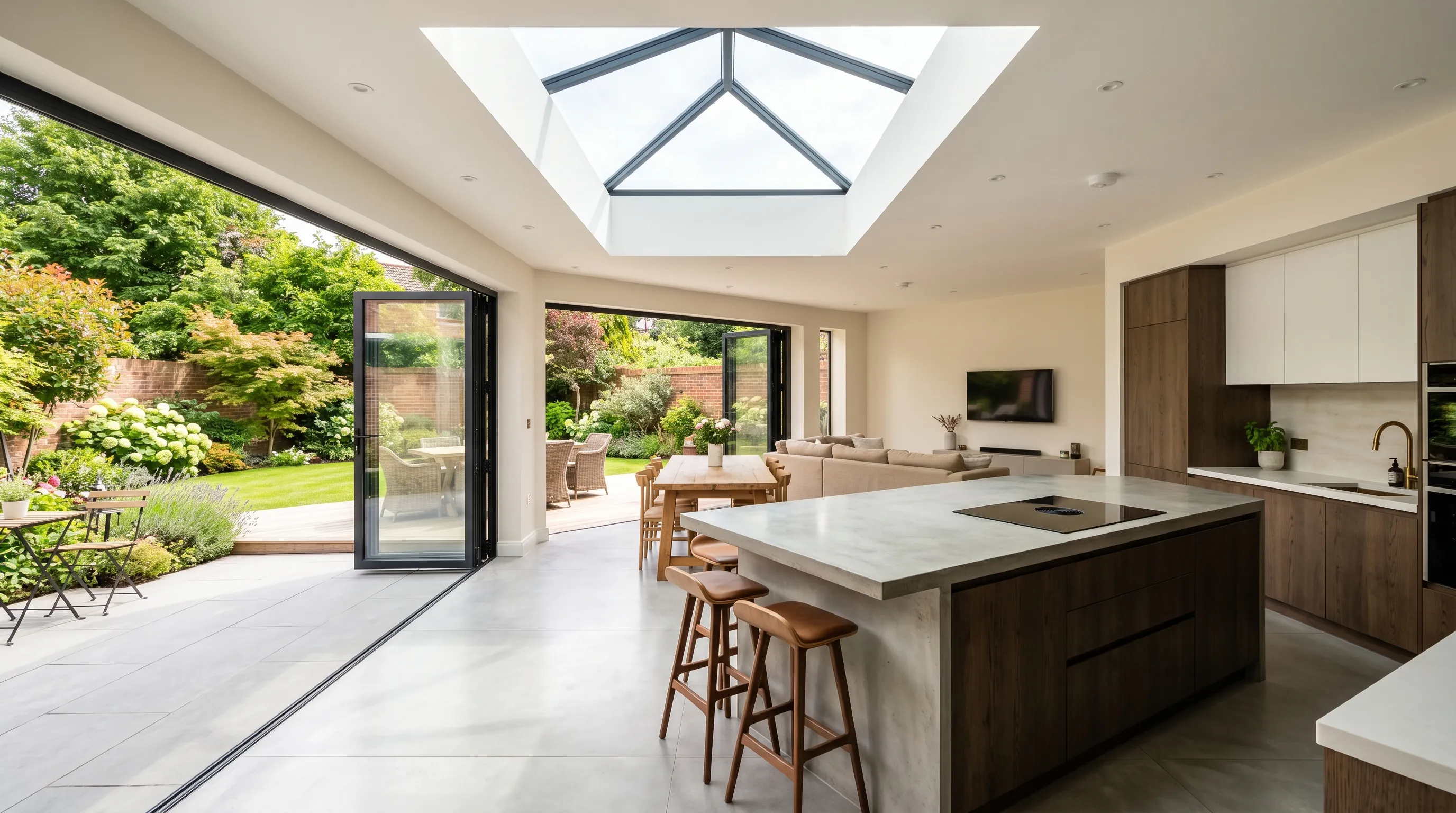
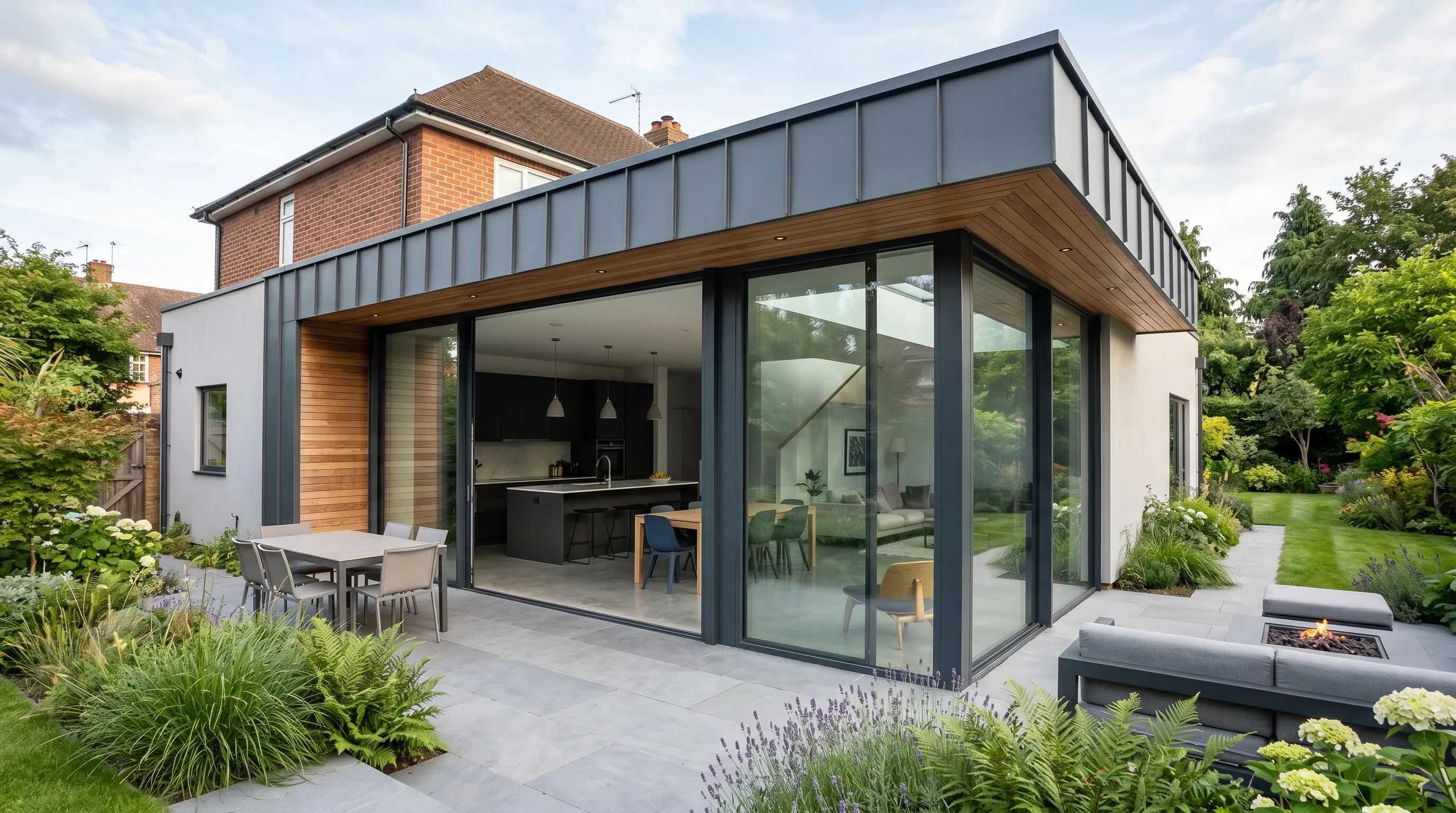
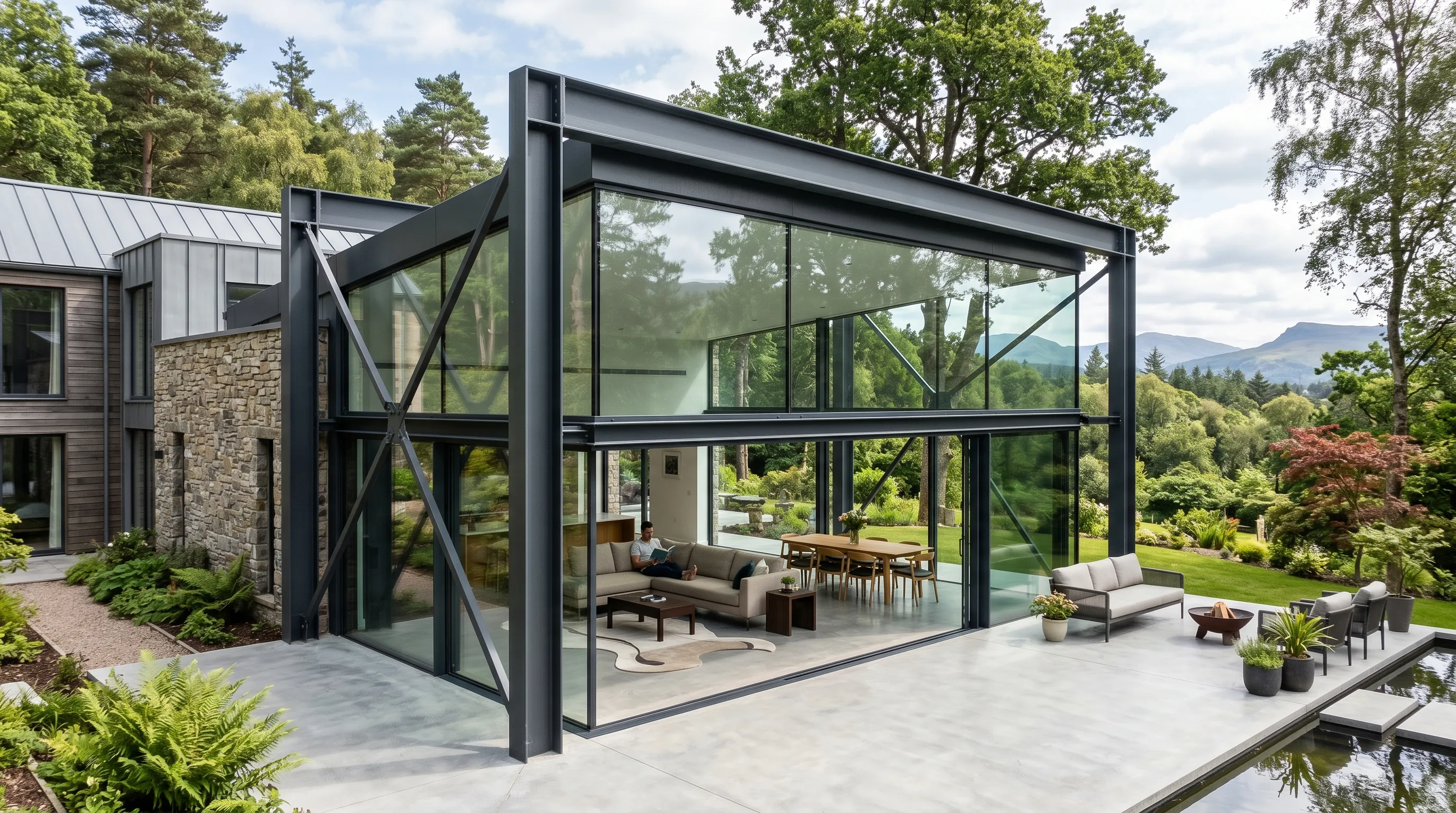
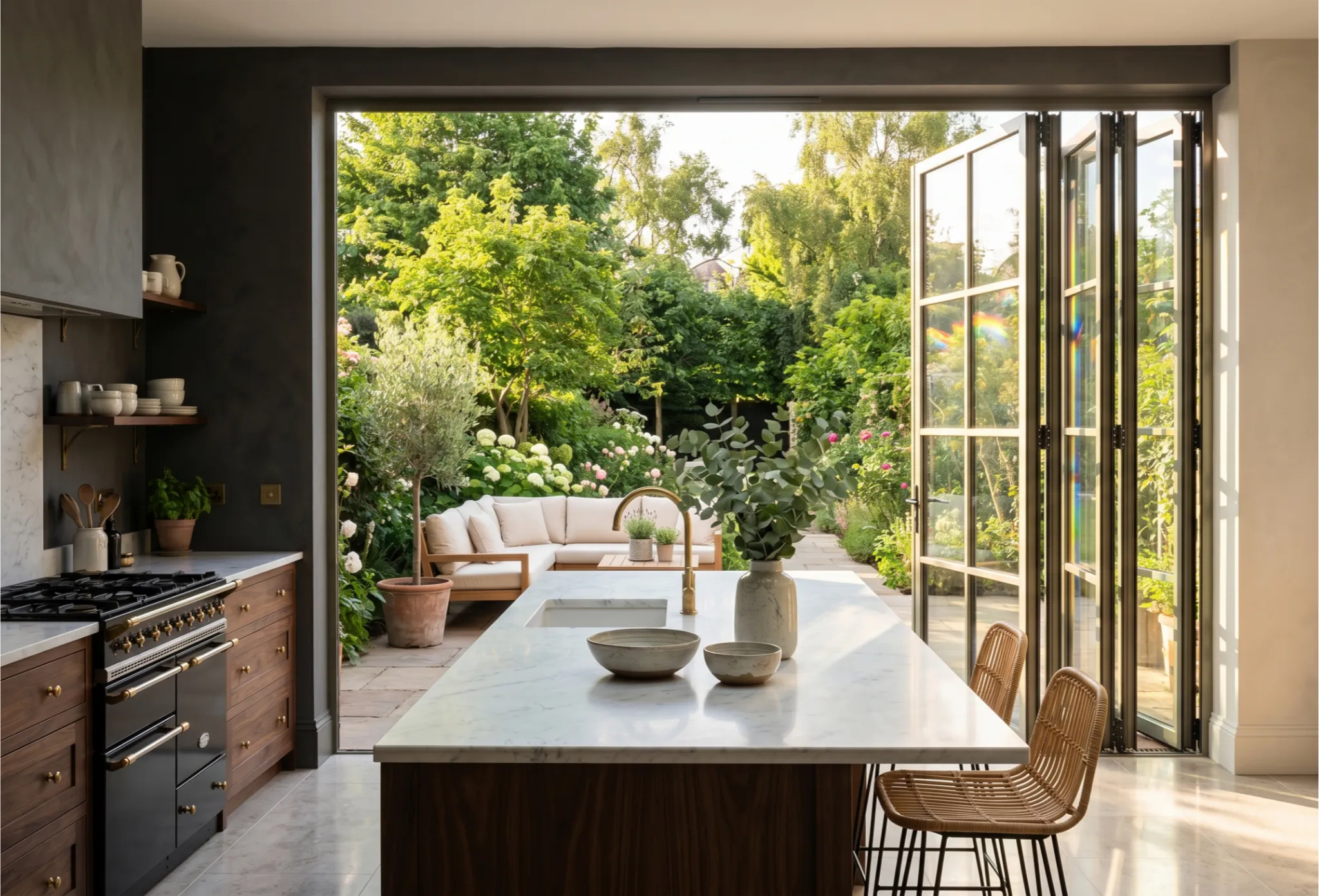
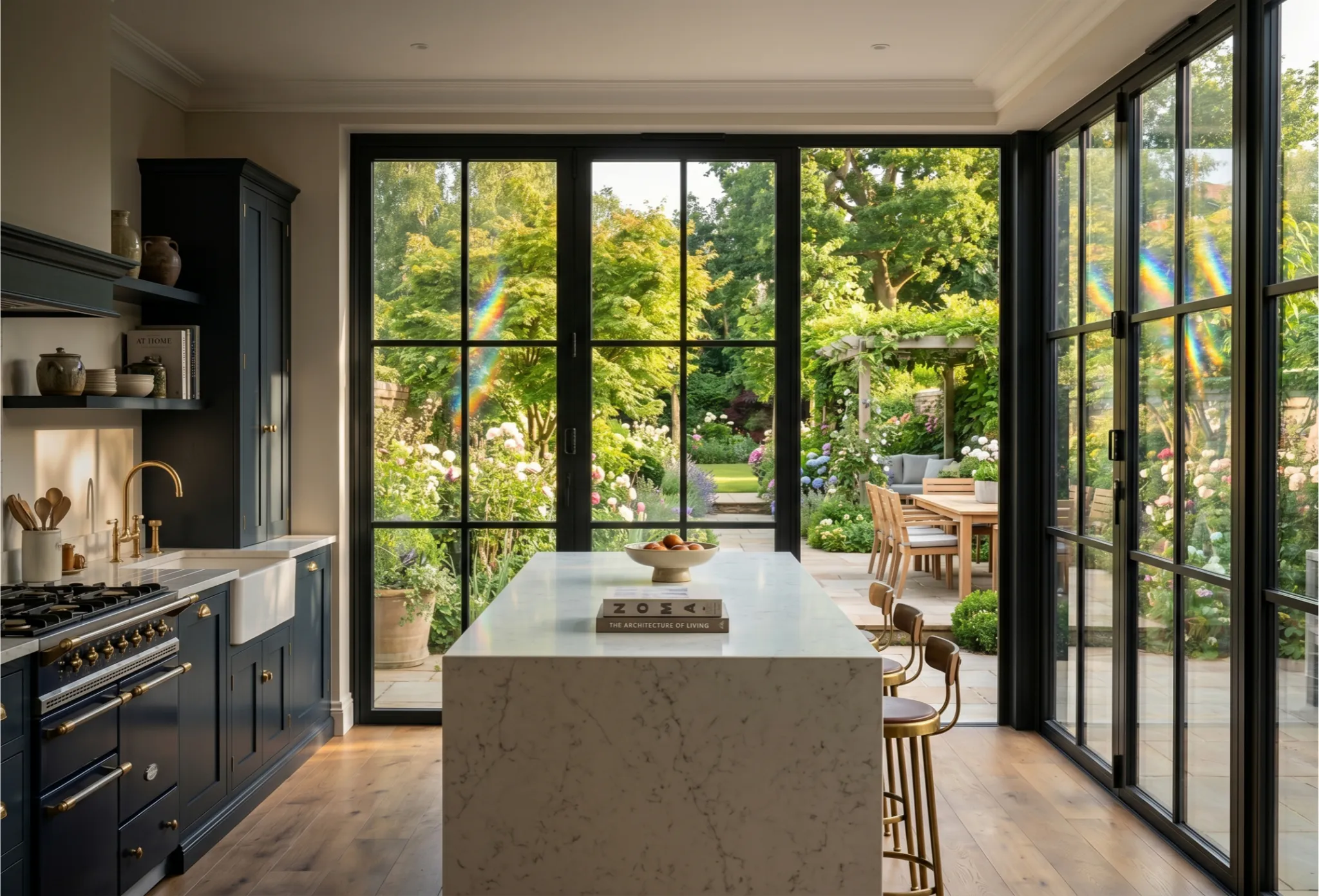
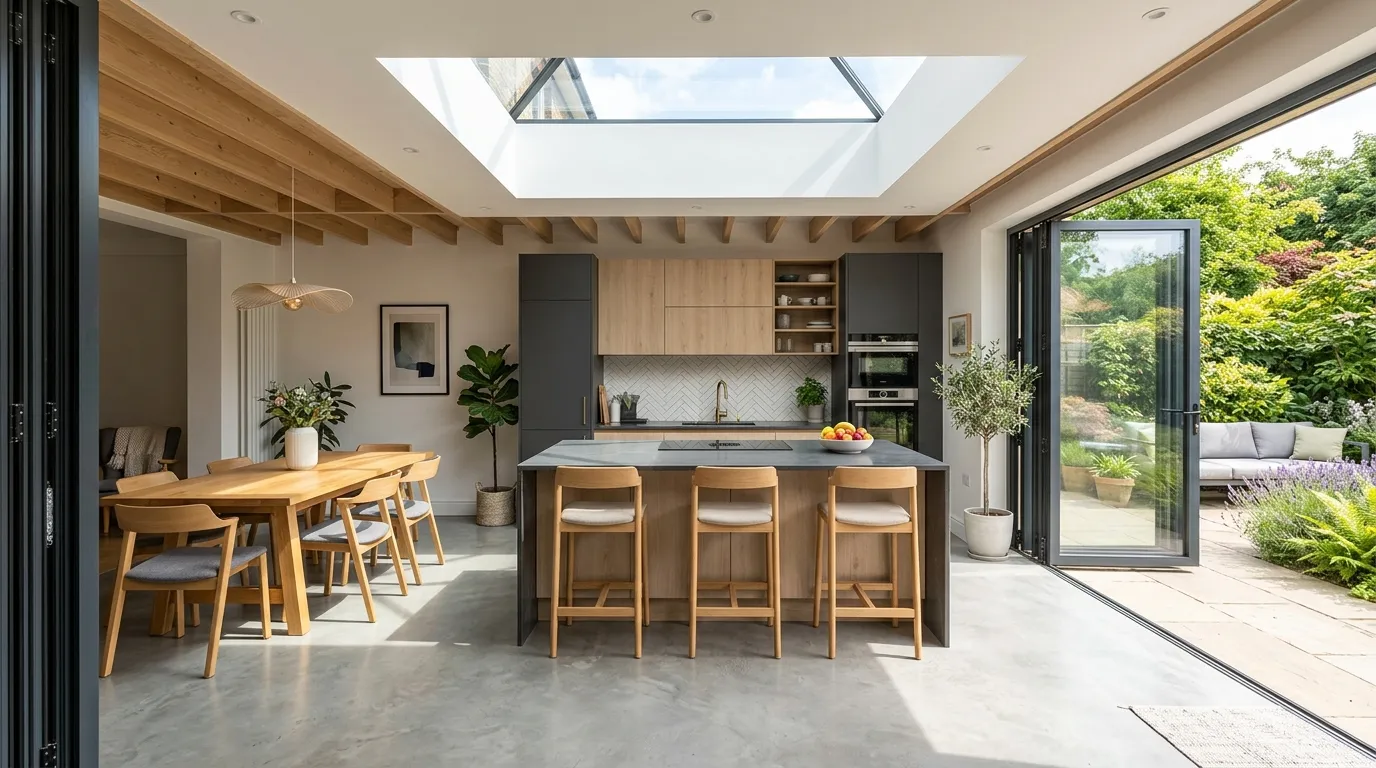
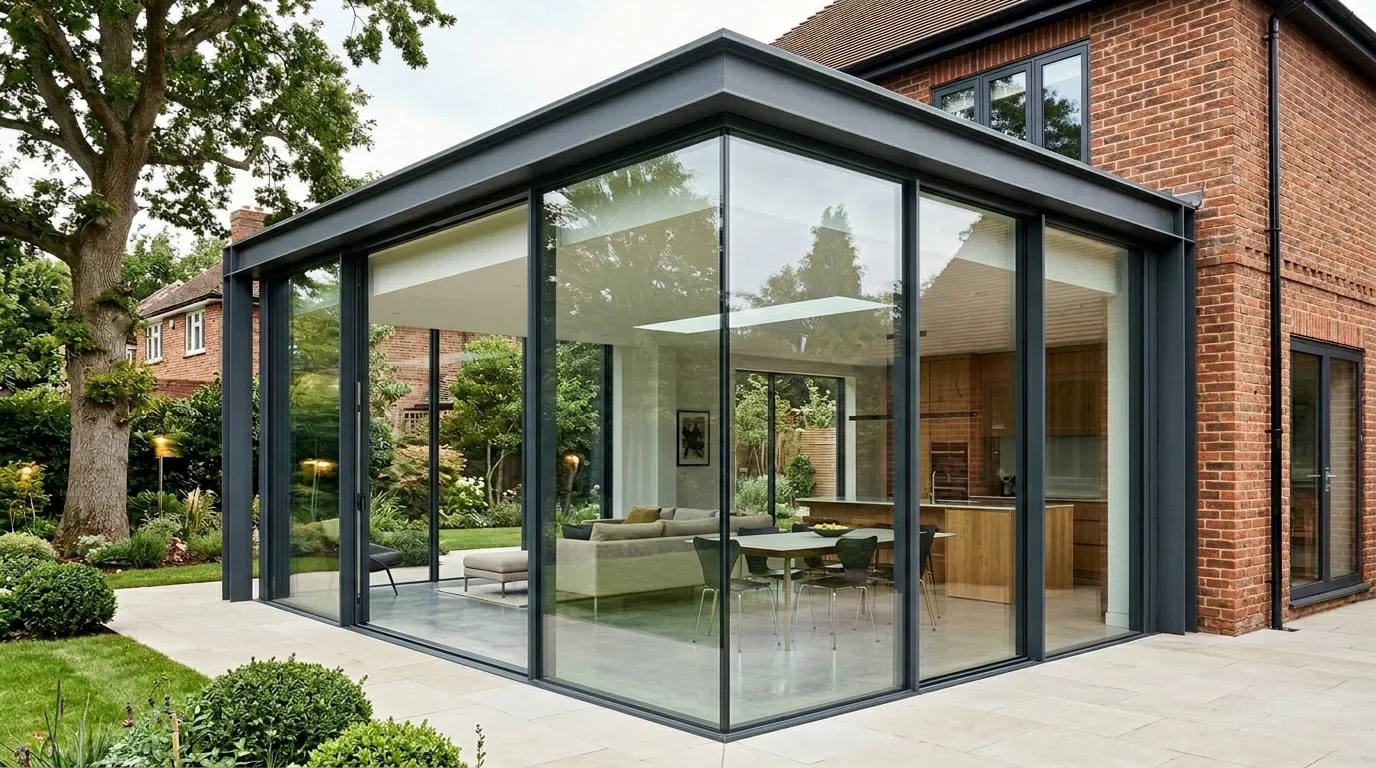
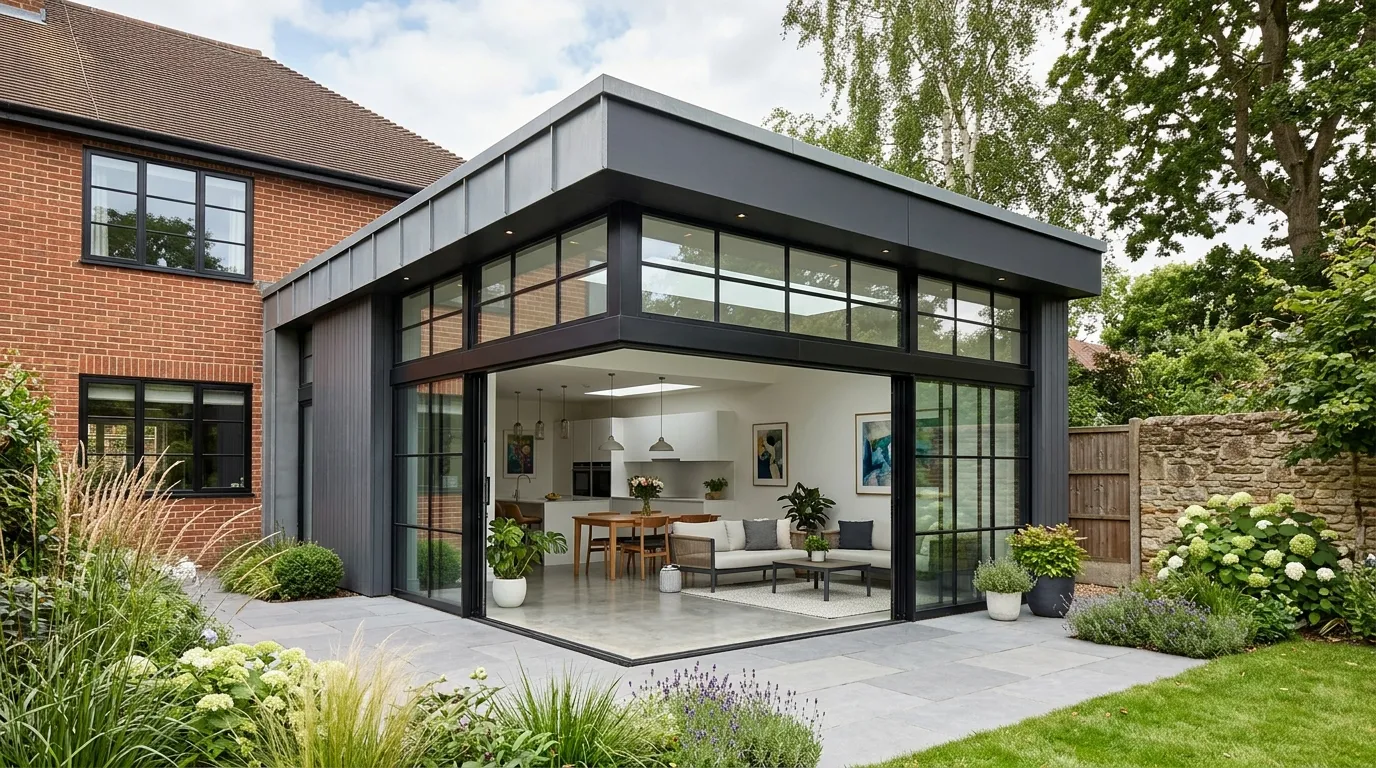
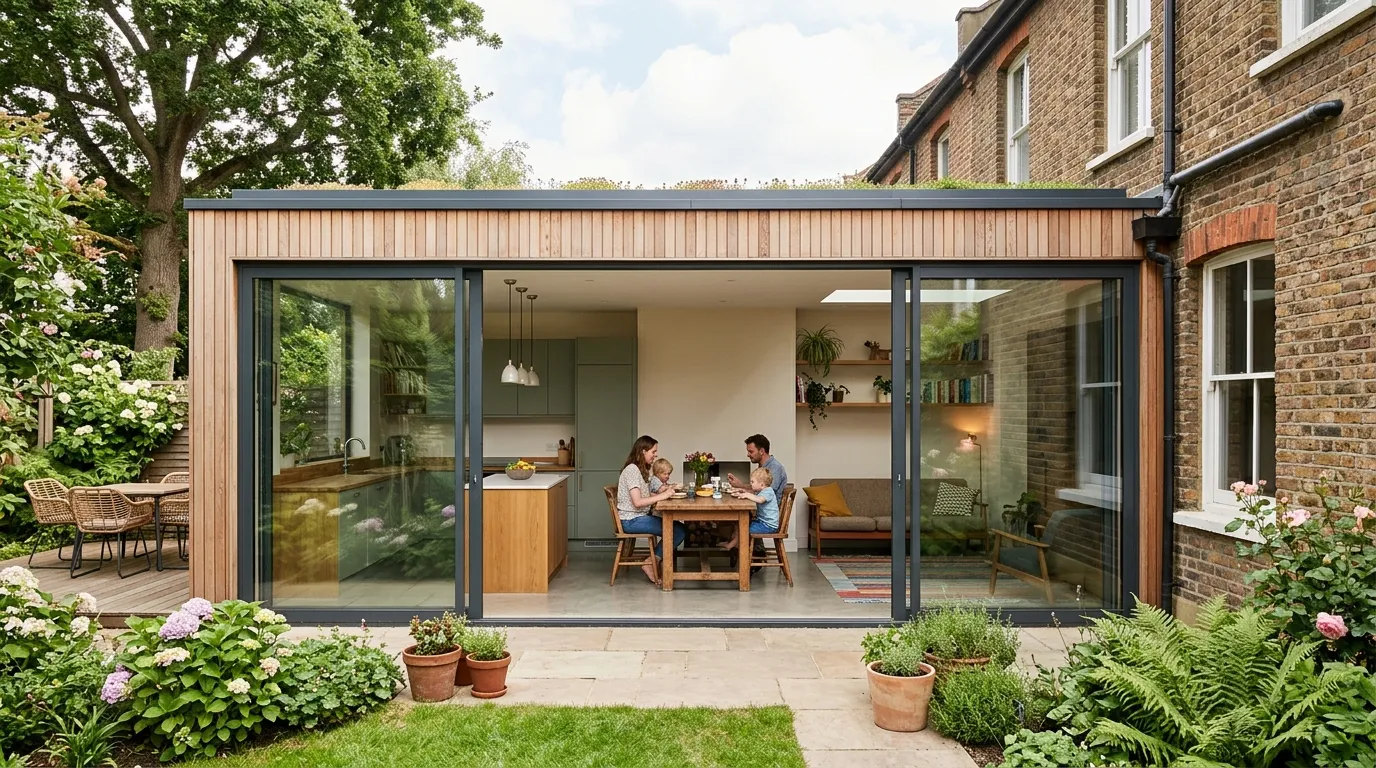
Because we are a glazing company first, we plan extensions around the glass. A 5 m bifold to the garden. A 2 m by 1 m flat roof lantern above the island. Full-height picture windows on the side walls. Big glass makes a modest-sized extension feel twice as big and floods every corner with daylight. It also improves the view from inside the rest of the house.
Roof style
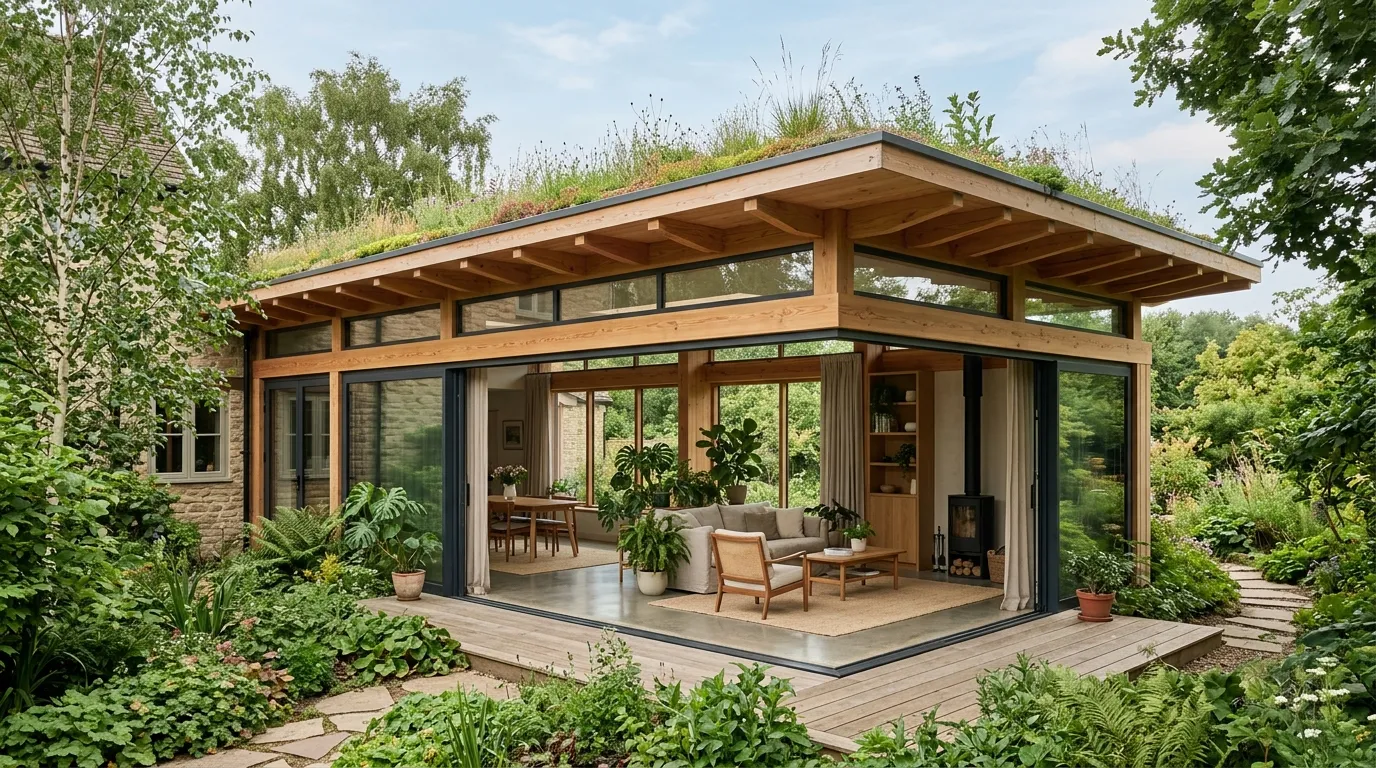
A flat roof with zinc or EPDM finish is the modern default - it is cheaper, it hides in the skyline and it lets you fit a big rooflight. A pitched roof with a gable suits traditional extensions and can include a vaulted ceiling for drama. A green roof with plants on top is on-trend for biophilic design and adds extra insulation. All options are Part L compliant as standard.
Heating and cooling
Part L 2022 requires new extensions to have wall U-values of 0.18 W/m²K, floor 0.13, and roof 0.15. We always meet or beat these. Underfloor heating is the usual choice - even heat, clear walls, cheap to run with a heat pump. A heat pump works brilliantly in a well-insulated new extension and often qualifies for the Boiler Upgrade Scheme grant.
Budget planning
Build costs in the Midlands in 2026 run from around £2,200 to £3,200 per square metre fully finished for a typical single-storey rear extension. That includes groundworks, structural steel, brickwork, roofing, plastering, electrics, plumbing, kitchen units, flooring and decorating. A 5 m by 6 m extension is £66,000 to £96,000. Add 10 percent contingency to every build.
Timeline
Planning to completion is usually 6 to 9 months. Design and drawings take 4 to 8 weeks. Planning or lawful-development certificate adds 8 to 10 weeks. Build itself is typically 10 to 16 weeks on site depending on size and complexity. We give you a fixed programme on day one and hold ourselves to it.
One team
The big advantage of working with us for the full build is you have a single point of accountability. The glass and the brickwork and the plastering and the decorating are all run by the same team. If something needs tweaking, you call one number. No blame-ping-pong between trades.
Book a free consultation
Use the form at the top to book a free on-site consultation. We come out, measure, sketch options with you on the iPad, show you the portfolio of recent builds, and give you a written budget estimate on the day. No obligation, no sales pressure.